In September-October last year, we undertook a 1500km road trip in our new Polestar 2 (Long Range). The night before we departed, I over-analysed the charging situation to try and make sure we not only had a plan, but we had a Plan B for when things were inevitably worse than expected. I almost tried convincing my family to take our old Mazda wagon, just to be safe.
It turns out my anxiety was unnecessary and once we hit the road, the EV Range Anxiety rather quickly. The reality is that road trips are a worst-case scenario for EV usage, and unlike in ICE vehicles the EV road trip situation is completely different from the day to day experience of driving an EV.
The reason for this is one that many people don't appreciate about everyday EV driving: the charging is almost invisible, a task you don't think about often. This is because each time the EV gets home, we plug it in (which takes about 15 seconds) and it automatically recharges. By default this just happens with excess Solar energy, otherwise it charges overnight when our electricity tariffs are very low. Every time we jump in the car, it's just ready to go having been sipping at cheap electricity.
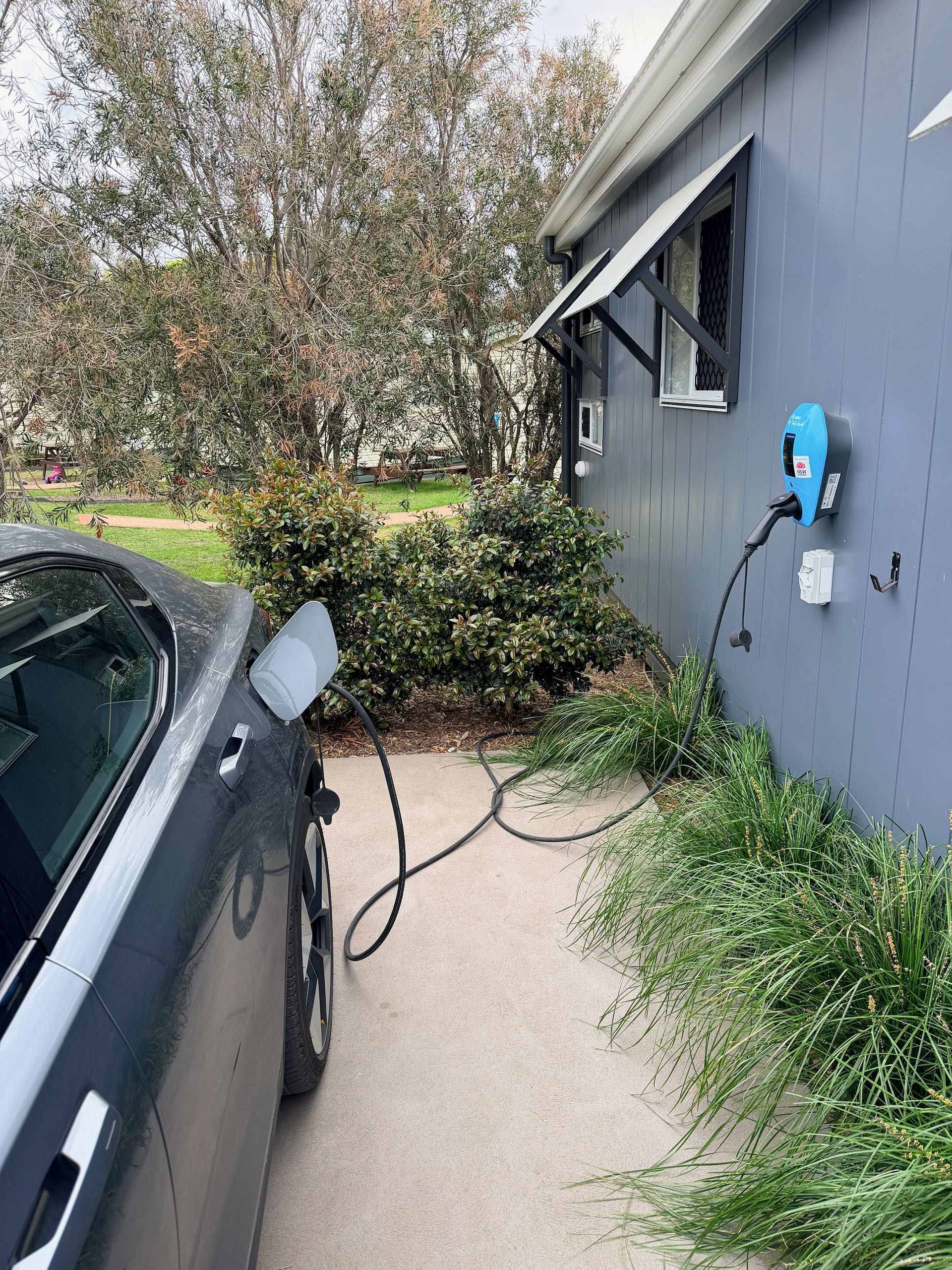
This means that the car is always fuelled up ready-to-go, and daily trips (school, work, shopping, beach excursions) are never interrupted by charging.
But road trips are different: That 4-500km range becomes an issue when you're away from home for two weeks. To make it worse, because you don't rely on charging infrastructure in daily use, there's an additional layer of unfamiliarity to contend with. This is one of the luxuries of ICE: the road trip experience is identical to the everyday one.
What we found on this trip was that charging mostly took place during other activities - while we were eating or sleeping. Across two weeks and 1500km, I estimate we "lost" about an hour to charging (eg time we were actually waiting for charging - just like when you stand at a petrol station filling your car).
We had a great mix of paid fast charging, free slow charging, and free trickle charging.
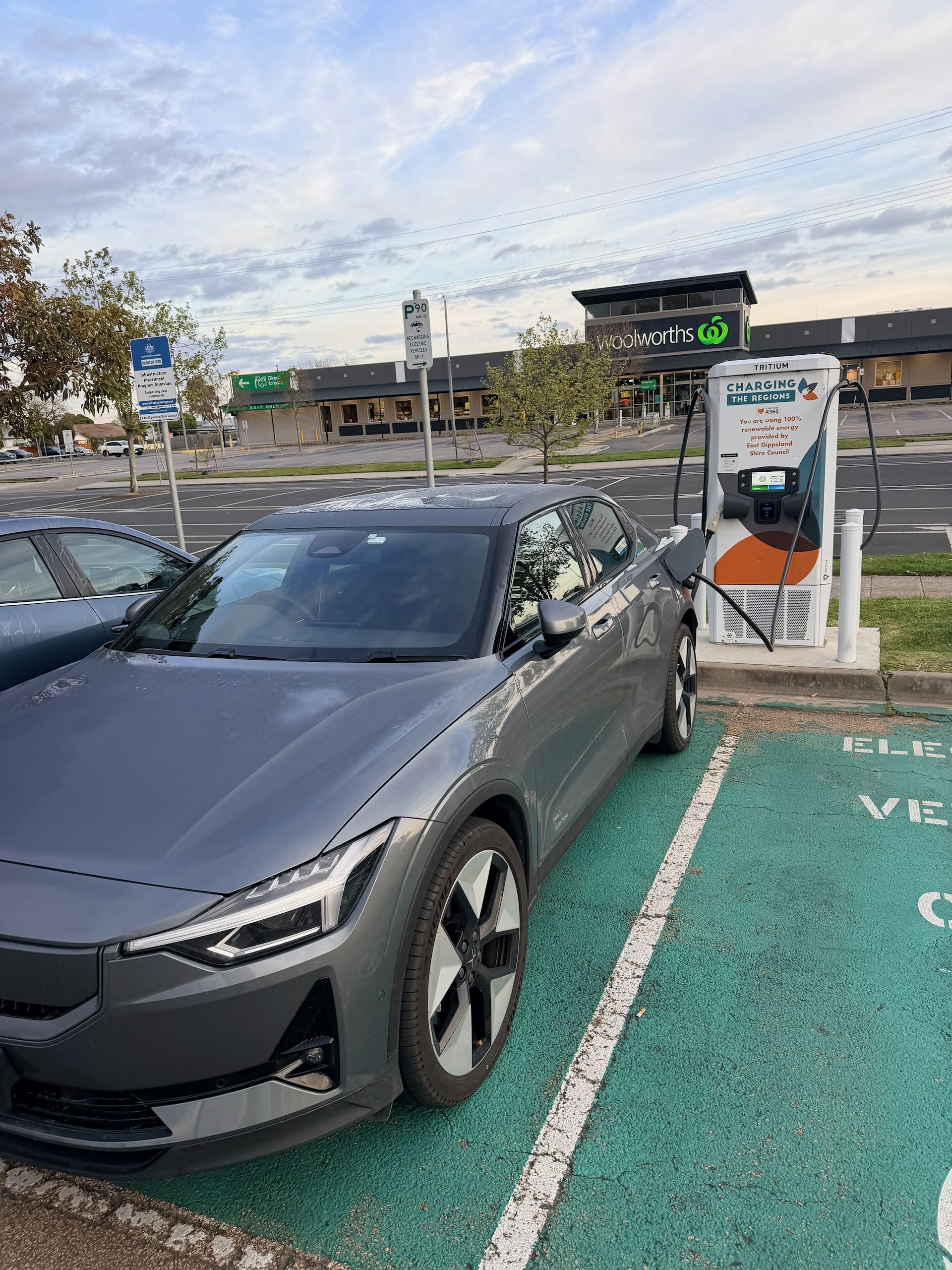
- Day 1: Bairnsdale. +50kWh while we ate breakfast; $28 with very low time cost.
- Day 2: Cann River (in transit to the border), +26kWh while we stopped for a bathroom / playground stop; $13 with moderate time cost.
- Day 2-3: Eden NSW, +30kWh via trickle charge at our accommodation while we ate dinner and slept ($0)
- Day 3-6 Merimbula NSW, +35kWh via a fast charger at our accommodation while we slept ($0). We didn't realise this charger was at the Holiday Park, it was a very nice surprise! Our alternative was public charging infrastructure and/or trickle charging, which is fine for overnight use.
- Day 7 Cooma NSW +26kWh while we ate lunch ($13, no time cost)
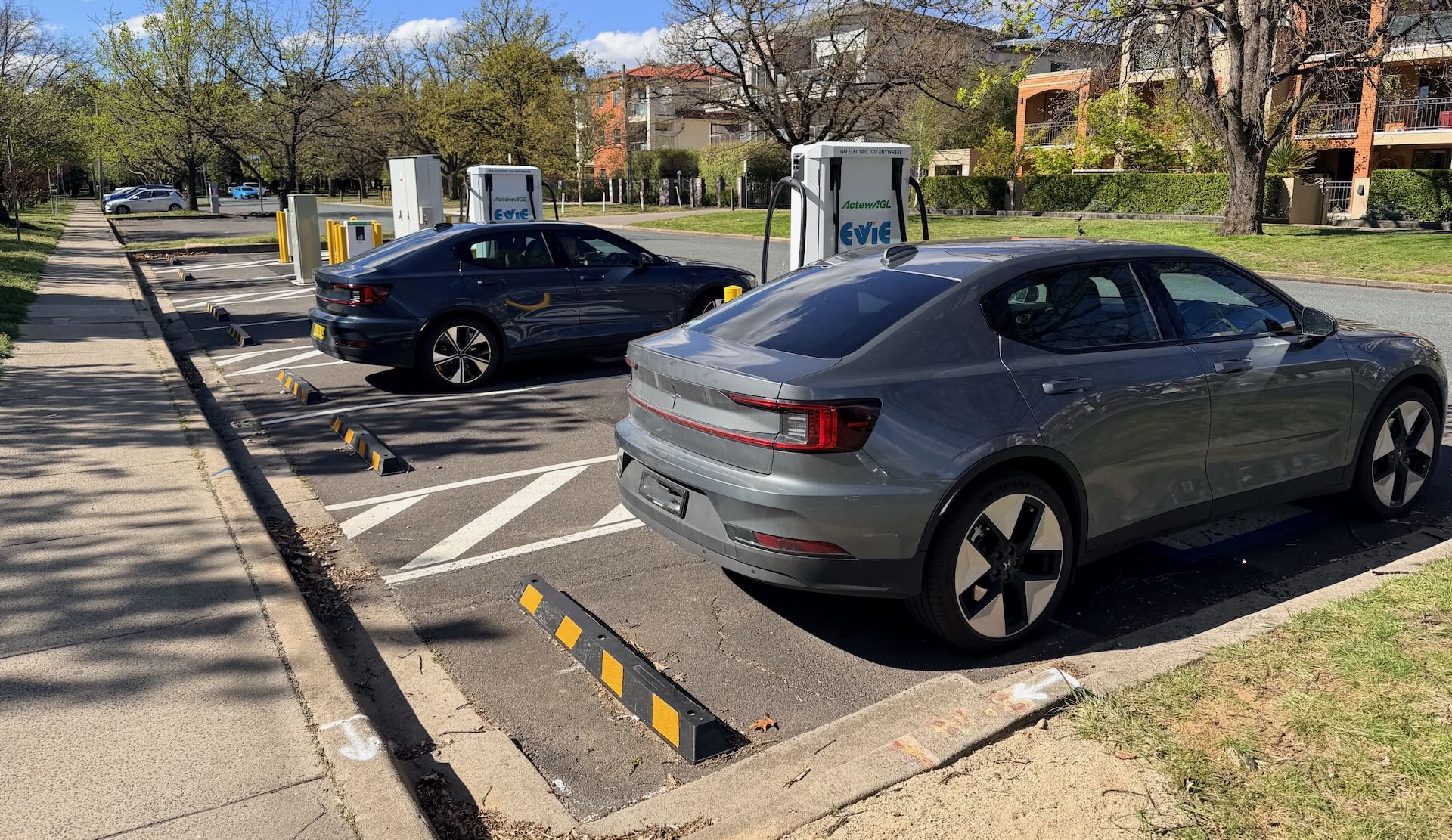
- Day 10 Canberra ACT, +41kWh at Evie charger while I ran ($24, marginal time cost to drive to the charger as I ran from there, not from the accommodation)
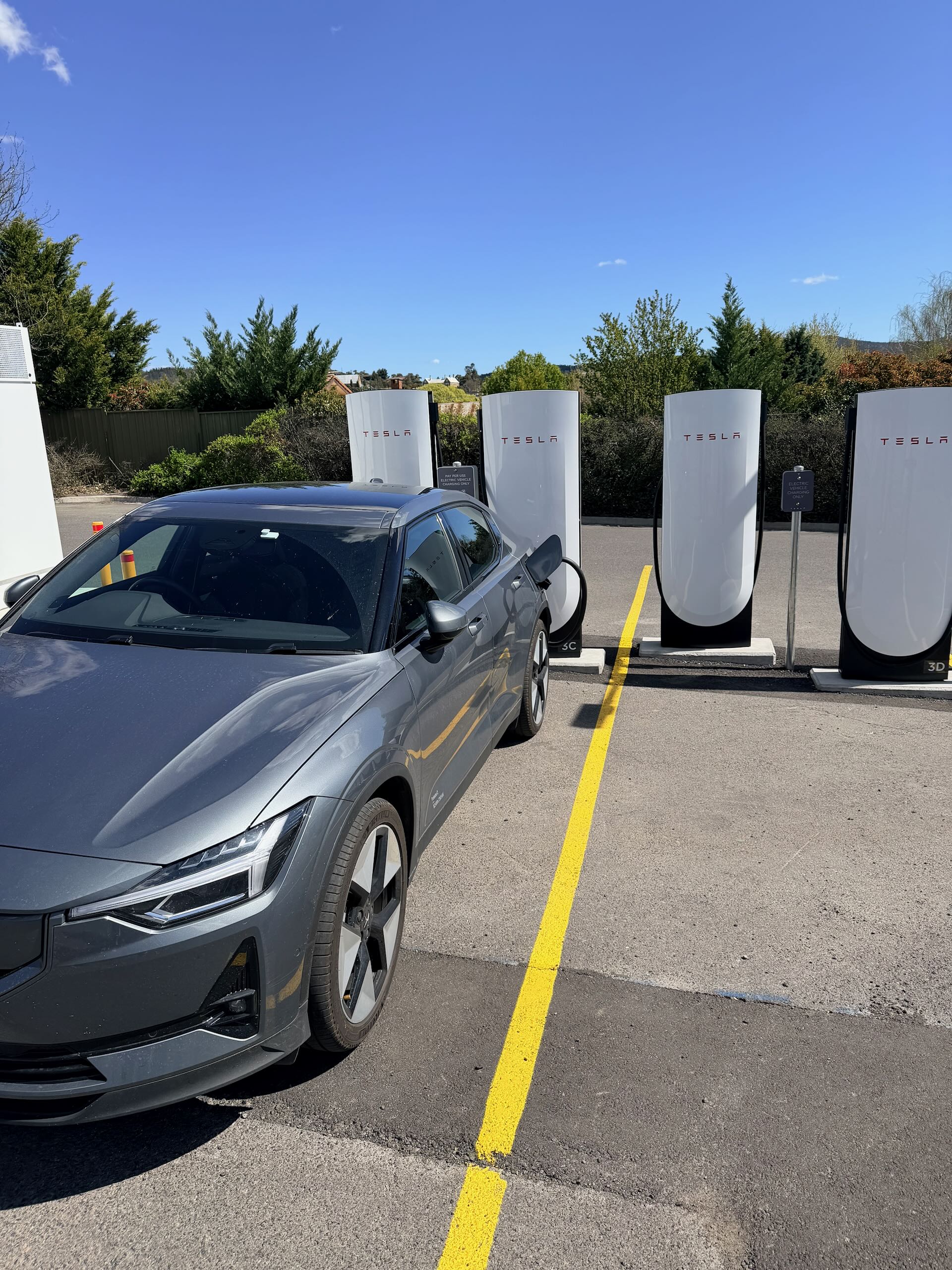
- Day 11 Albury NSW, +60kWh at Tesla supercharger while we ate lunch ($30). Low time cost as I had to walk 5 mins to the lunch spot where my family ordered ahead for me.
- Day 11 Avenel VIC, +15kWh at a toilet stop ($12, no time cost)
Total cost was $122. The car spent 33h charging, but only 1-2 hours of that was 'waiting' for the car to charge. For comparison, if we used our second car (a Mazda 6 with approx 8L/100km efficiency) we would have used 2 tanks of fuel at a total cost of approximately $200, admittedly with a shorter fuelling time.
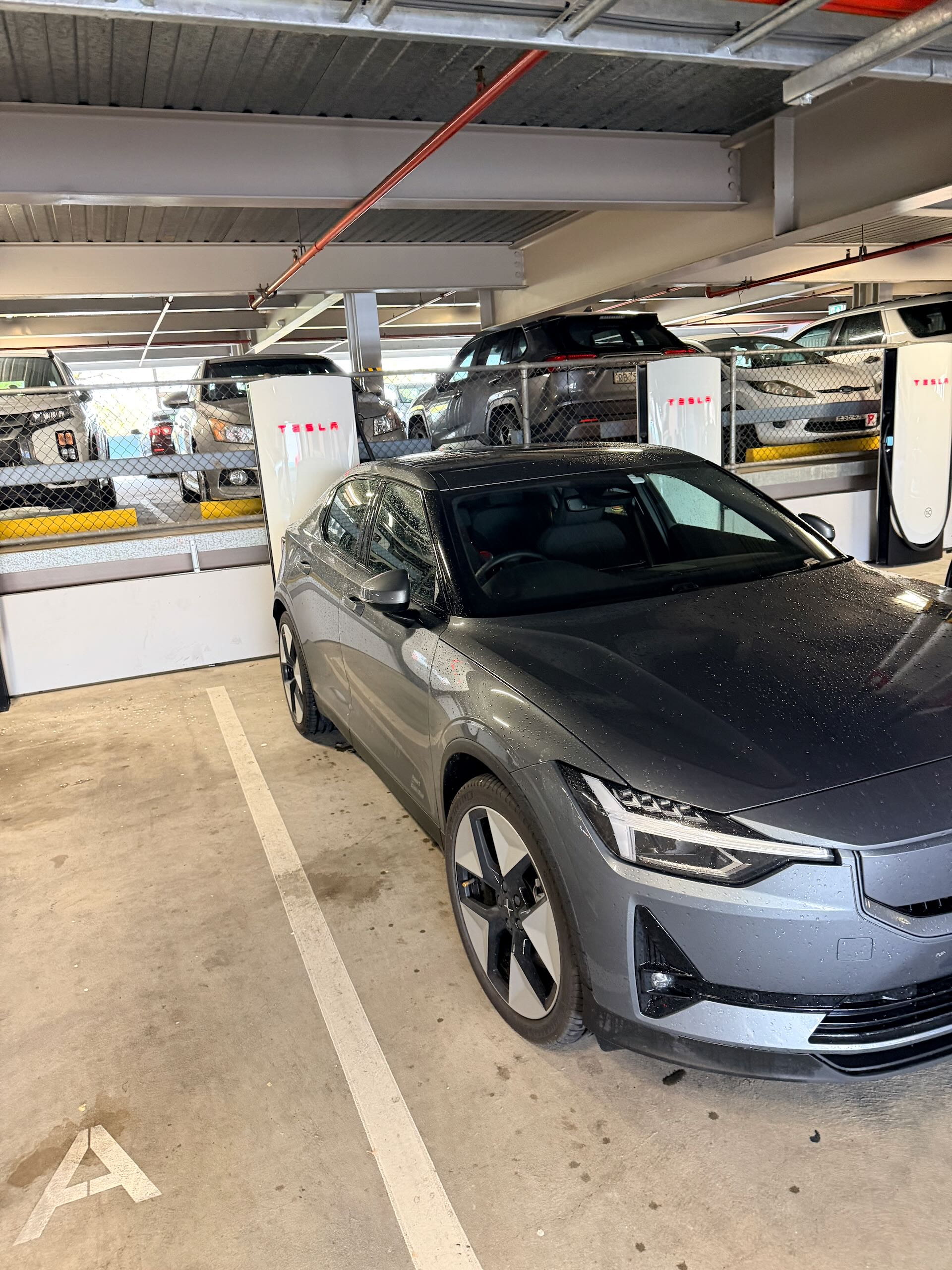
Another oddity of EV charging is that even though our vehicle has a theoretical maximum charge rate of 250kw, this can only be achieved in the right conditions. In particular: when the battery is approximately between 20% and 80% state of charge. Outside this range, charging rate slows - especially above 90%.
This means you don't want to just drive to 5% then charge to 100%. There's a significant time saving to stop multiple times to charge from say 30% or 40% to 80%, rather than a single big charge. But this is annoying to manage, so for the days we were on the road we relied on Polestar's built-in mapping to decide on charge stops. Based on Google Maps, it does a great job of estimating consumption based on road conditions and calculating when to stop, how much to charge, and which chargers to use to reduce stopping time. The charging stops are then included in your final destination time estimate. Neat!
We cross-checked charging stops in the Plugshare app, and in A Better Route Planner (ABRP), but after 2 days we just trusted the car with zero concerns.
So did we carry anxiety over the first few days of the trip? Absolutely. Was it ultimately my favourite road trip in years? Absolutely.

Did you find this post interesting or helpful? Show your appreciation by buying me a beer or a coffee!